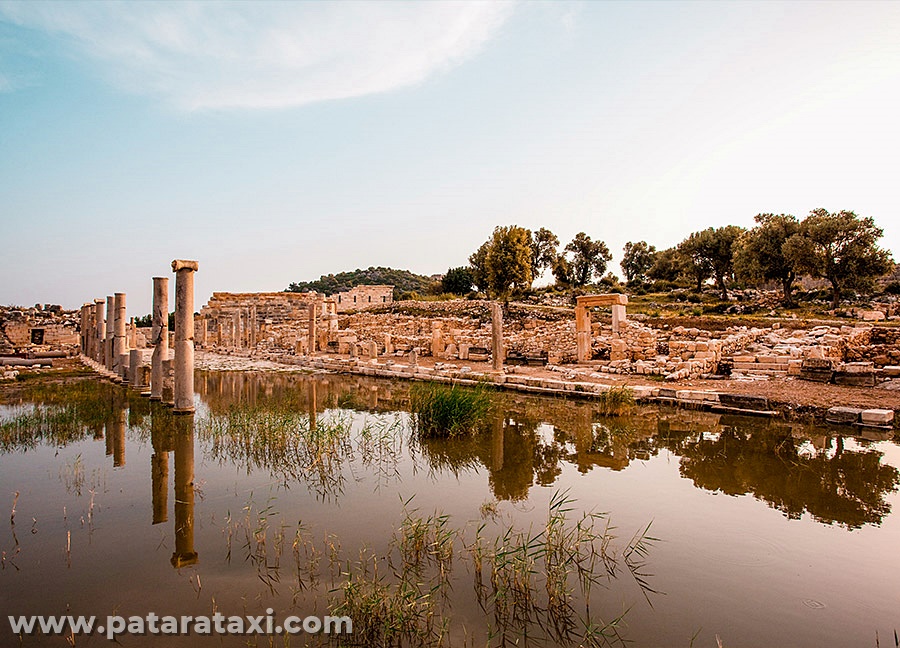
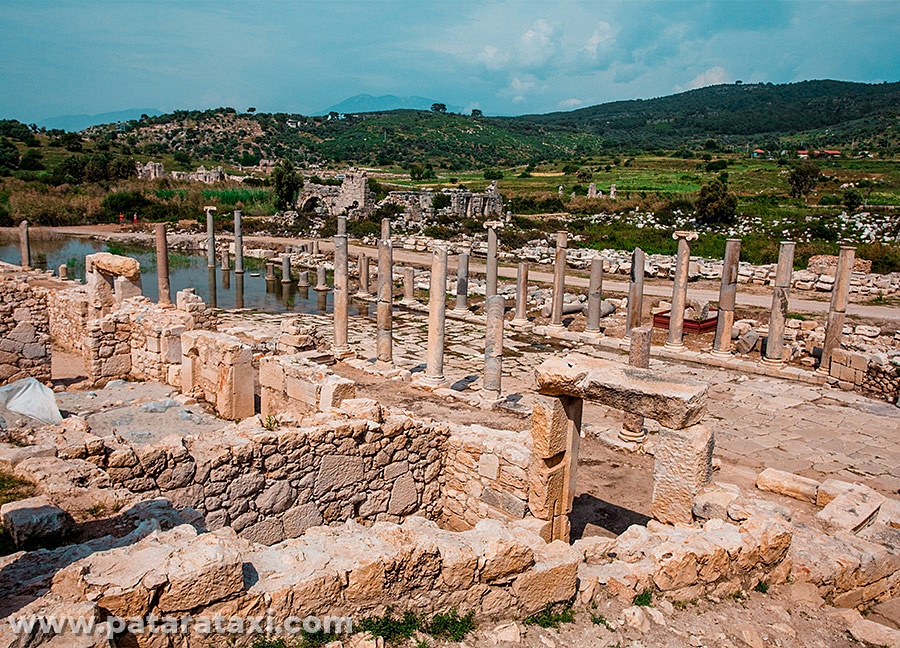
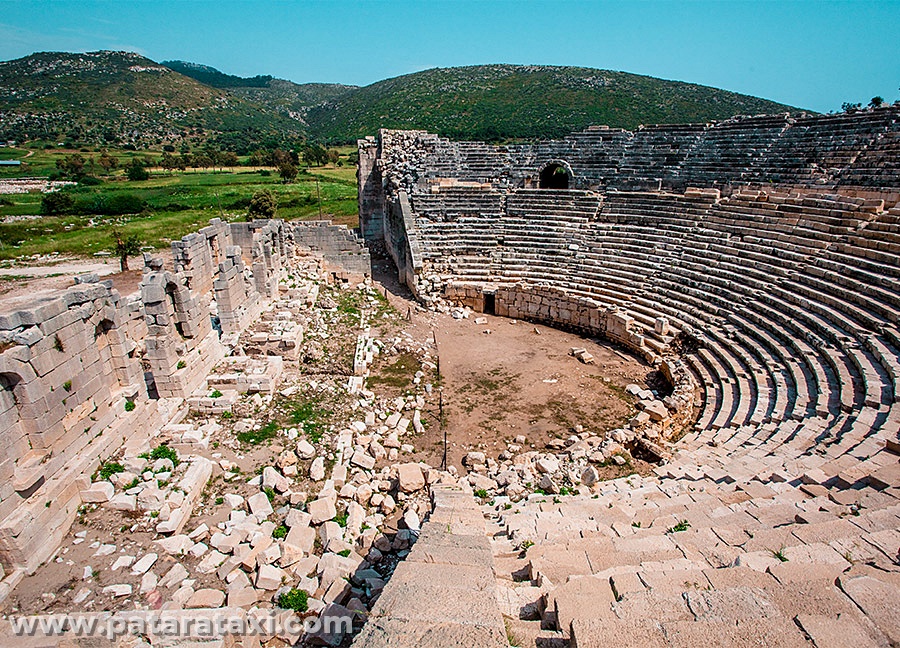
Patara Ancient City, located southwest of the Xanthos Valley between Fethiye and Kalkan, has historical significance dating back to ancient times, with evidence found from the Hittite period. It served as an important port and religious center, notably as the birthplace of St. Nikolaos. Over time, its harbor filled with sand, leading to a decline in importance. Excavations since 1988 have revealed well-preserved ruins, including a Roman Triumphal Arch and a necropolis with Lycian sarcophagi. The city features a 6000-seat theater, Vespasian Bath, Corinthian Temple, and the world’s oldest democratic parliament building. Nearby Patara Beach offers stunning landscapes and is a nesting ground for Caretta Caretta turtles.
Patara Ancient City is located at the southwest end of the Xanthos Valley between Fethiye and Kalkan, within the borders of Gelemis Village. Mentioned as ‘Patar’ in the Hittite texts of the 13th century BC, the city’s artifacts, including a stone ax from the pre-Iron Age unearthed on the eastern slope of Tepecik, prove its ancient history.
Due to being the only place in the Xanthos Valley that opens to the sea, Patara has always been significant and even served as the capital of the Lycian League. Becoming a Roman province in 43, the city functioned as a port for storing and shipping grains from Anatolia to Rome and held importance as a religious center for Christians as the birthplace of St. Nikolaos, also known as Santa Claus.
Excavations at Patara Ancient City have been ongoing since 1988, with entry through the magnificent Roman Triumphal Arch. The necropolis area, with Lycian sarcophagi, extends west of the arch. Leaning on Kurşunlu Tepe, where the city’s general view is best seen, is a 6000-seat theater bearing traces of Hellenistic and Roman Period architecture. Other ruins include the Vespasian Bath, the Corinthian Temple, the main street, the port, and the granary.
Close to the Lycian Way route, Patara offers exploration of Patara Beach, one of the world’s most beautiful beaches, after embarking on a historical journey dating back centuries. With approximately 18 km in length, the coast witnesses wonderful landscapes created by dunes, resembling deserts, and serves as one of the rare regions where Caretta Caretta turtles have laid eggs and hatched for millions of years.